Search "wildflower print" on Etsy and you'll find this listing sitting near the very top of the results. Three matching watercolor botanicals, beautifully framed, styled in a sun-lit living room that makes you want to redecorate immediately. It looks like something from a boutique home decor brand with a warehouse full of inventory and a design team.
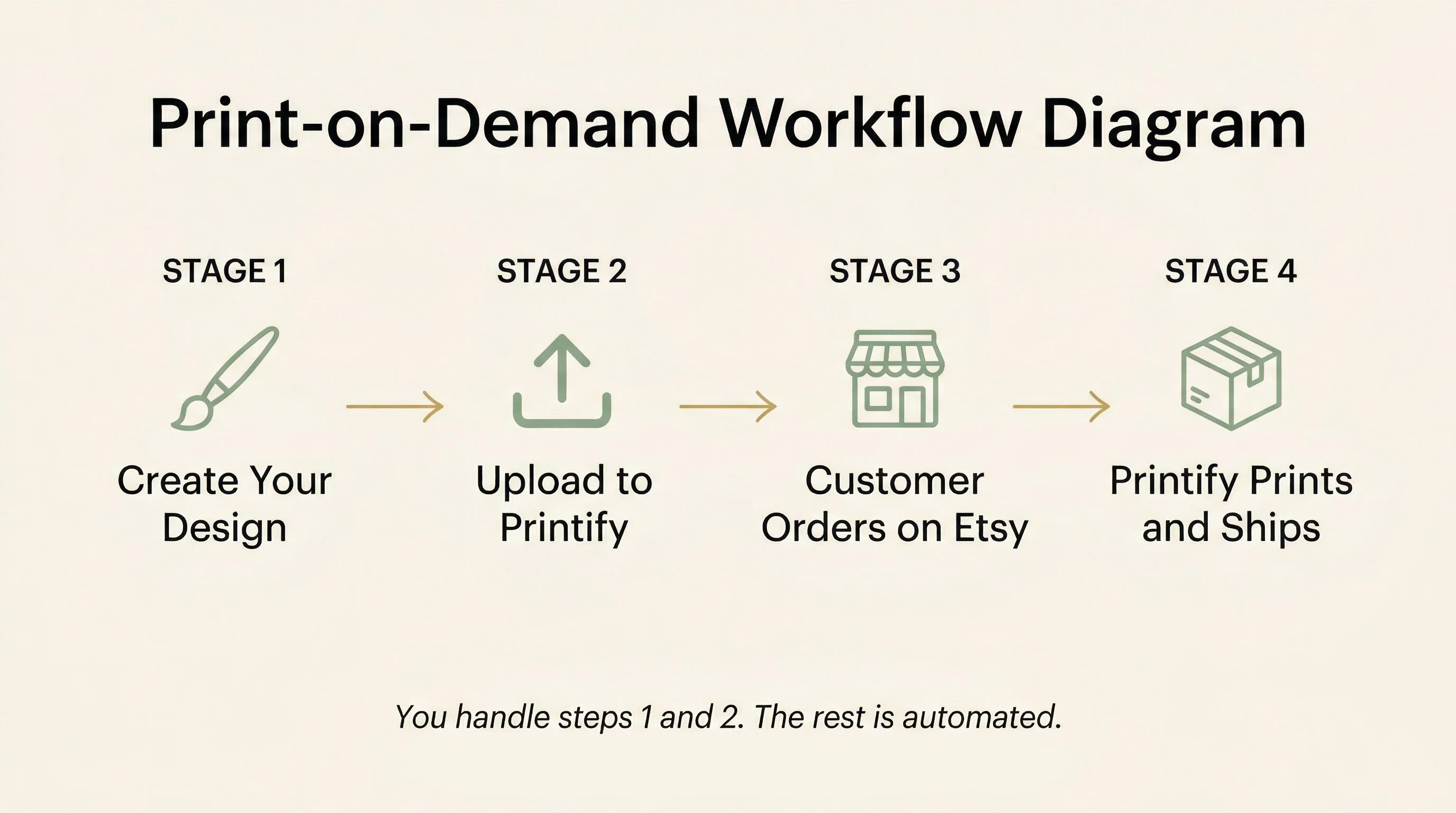
Here's the thing: it's almost certainly one person (or a very small team) who never touches the product. They create the designs, upload them to a print-on-demand provider like Printify, and when someone places an order, a third party prints it, frames it, and ships it straight to the buyer's door. The seller's entire job is the creative work and the listing itself. No inventory, no packing tape, no trips to the post office.
That's what caught my eye. Not just the listing, but the machine behind it. Because once you understand how this works, you start to see the opportunity everywhere.
The timing is perfect
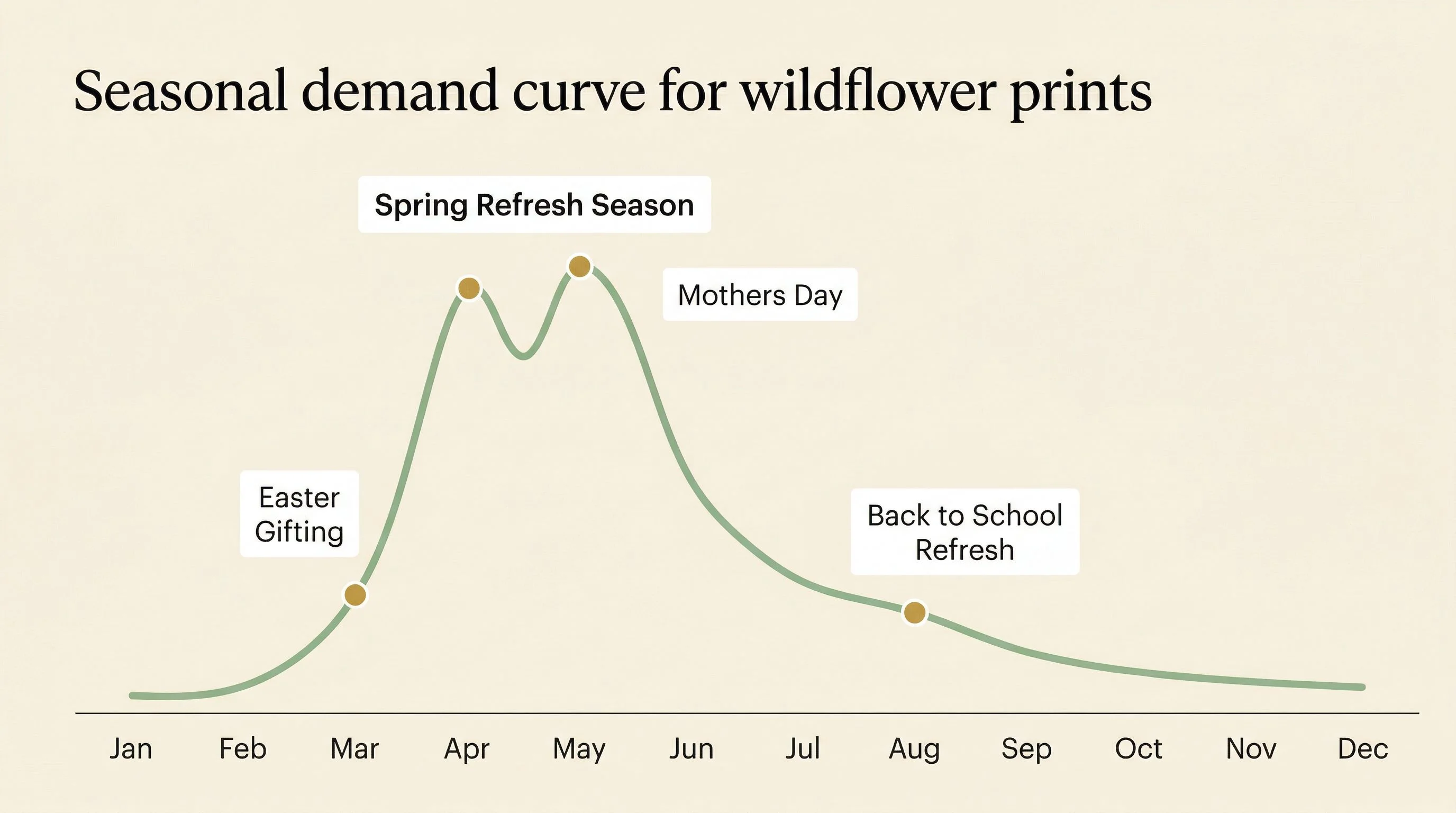
Spring is the single biggest buying window for botanical and wildflower home decor on Etsy. We're in it right now. Buyers are refreshing living rooms after a long winter. Easter is behind us but Mother's Day is straight ahead, and this listing explicitly positions itself as great for gifting. That's not accidental. The description calls out holidays like Christmas and Mother's Day, birthdays, weddings, and anniversaries. They're catching every gift-giving intent keyword Etsy's search engine might surface for, while the actual product design screams "spring refresh."
Here's what most new sellers miss: the best time to launch a seasonal listing is weeks before peak demand, not during it. This shop has listings dating back months (in some cases years), accumulating reviews and sales velocity so that when the spring wave hits, Etsy's algorithm already trusts them. They're not fighting for position in April. They earned it in January.
Niche specificity without niche paralysis
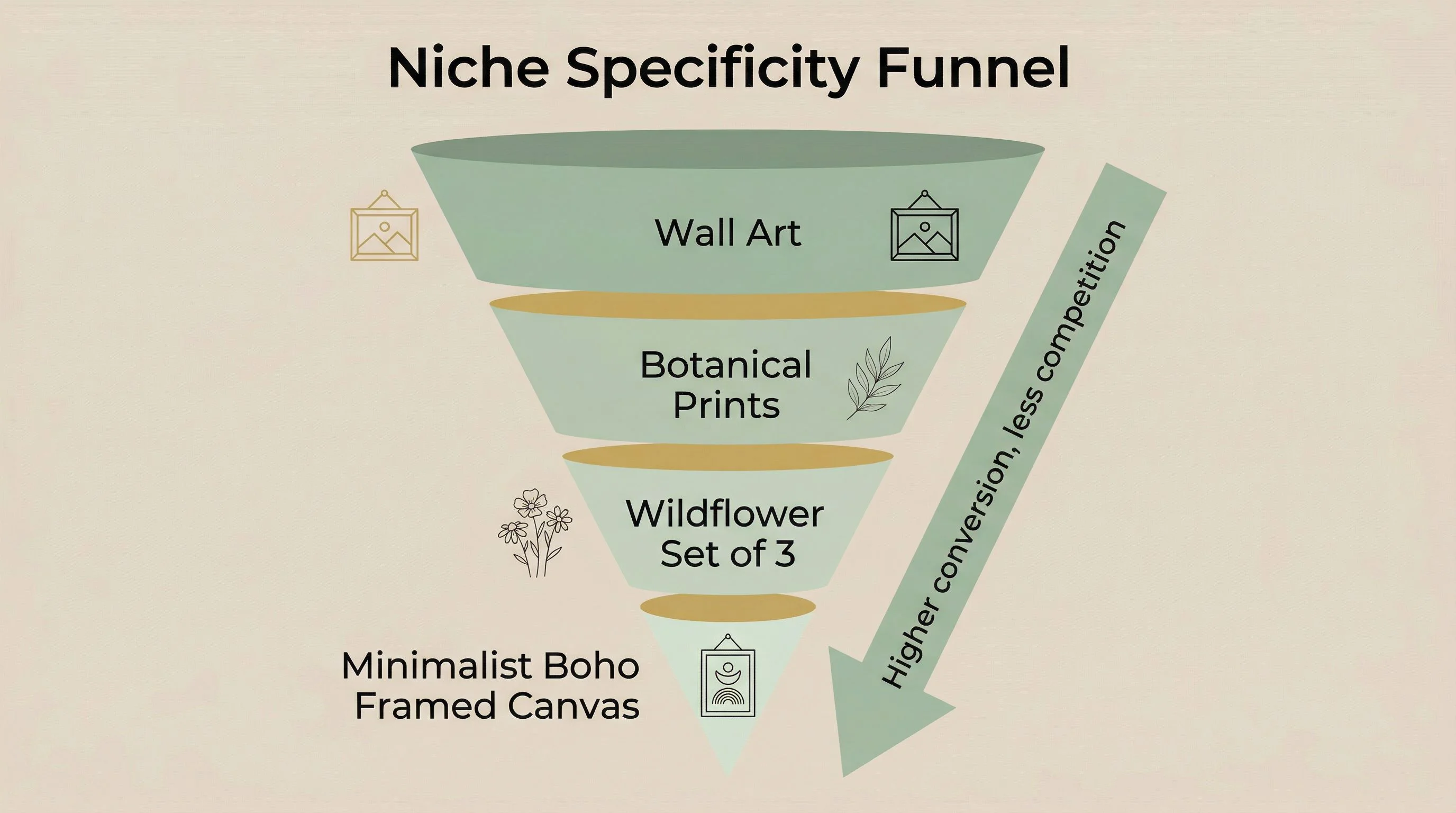
The listing title alone is doing heavy lifting. It's not just "wildflower print." It's "Framed Canvas Wall Art Print Set of 3 Watercolor Wildflower Floral Botanical Prints Minimalist Modern Boho Wall Art." That's a title engineered to match a dozen different search intents at once. Someone searching "boho wall art" finds it. Someone searching "botanical prints set of 3" finds it. Someone searching "minimalist bedroom decor" finds it.
But the real niche play is the product configuration. A single print competes with millions of listings. A curated set of 3, pre-framed, with coordinating designs and multiple frame color options, is a dramatically more specific (and more valuable) product. The buyer doesn't have to figure out what goes together. They don't have to find frames. They don't even need a drill bit. Hanging hardware is included. Every friction point between "I want pretty wall art" and "it's on my wall" has been engineered away.
That operational polish is what separates a listing that gets favorited from one that gets purchased. And on Etsy, purchases are what everything else is built on.
Mockup quality is the conversion lever
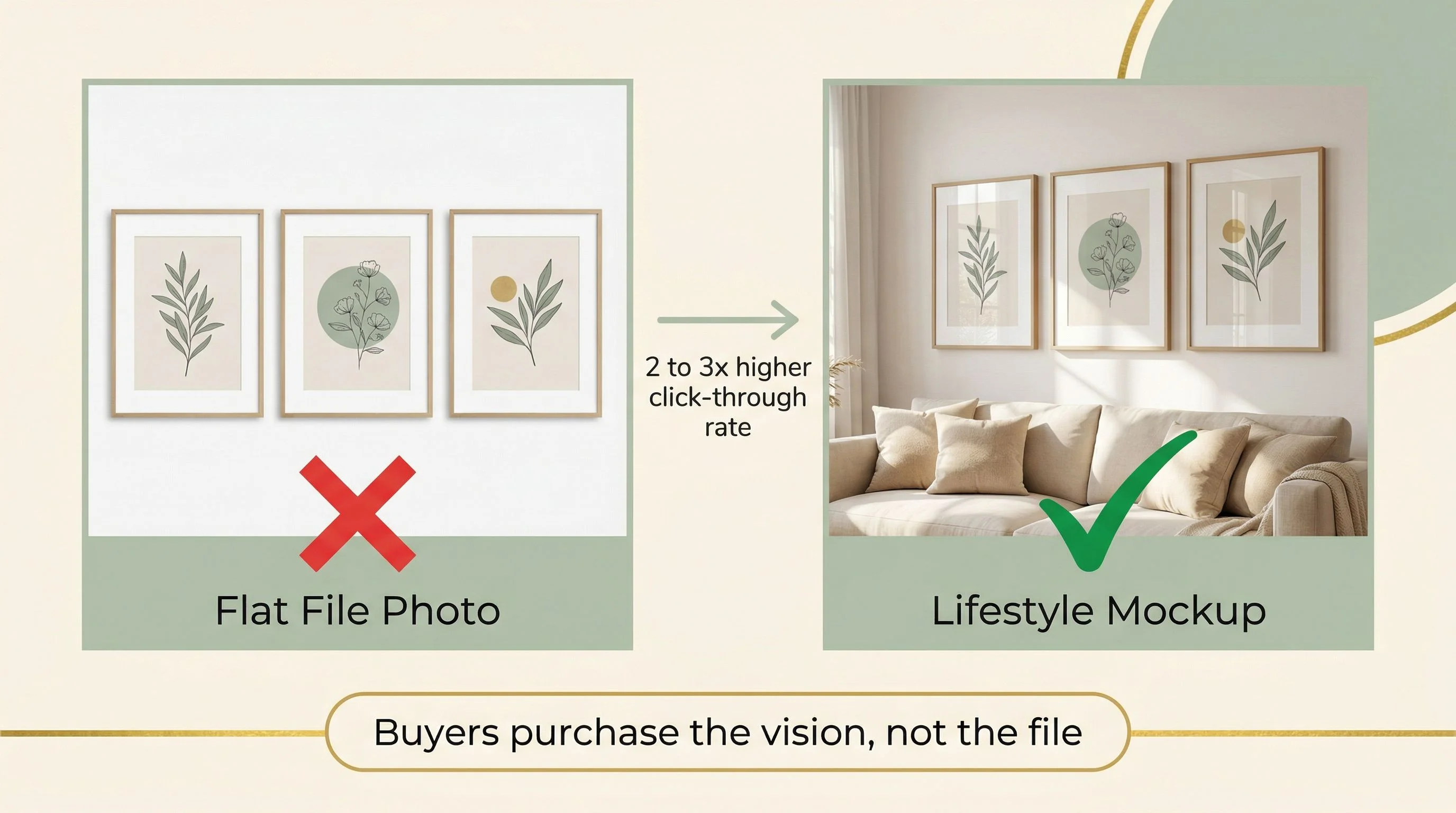
If you look at the top-ranking wildflower print listings on Etsy right now, they all share one thing: the primary photo shows the art in context. Above a couch. On a bedroom wall with soft natural light. Styled with plants and throw pillows. The buyer is not purchasing three pieces of printed canvas. They're purchasing the feeling of that room.
This particular shop and its closest competitors have nailed the mockup game. The hero image shows the set of 3 hanging together in a real-looking room scene, and every variation (black frame, white frame, natural wood) gets its own styled shot. That means every thumbnail in the search results looks like a finished, aspirational space. Buyers click because they can already picture it on their wall.
For digital product creators, this is the single most transferable lesson in this teardown. Whether you're selling printable wall art, planner templates, or Canva bundles, the mockup is not decoration. It is the product. Invest the time there first.
How momentum compounds on Etsy
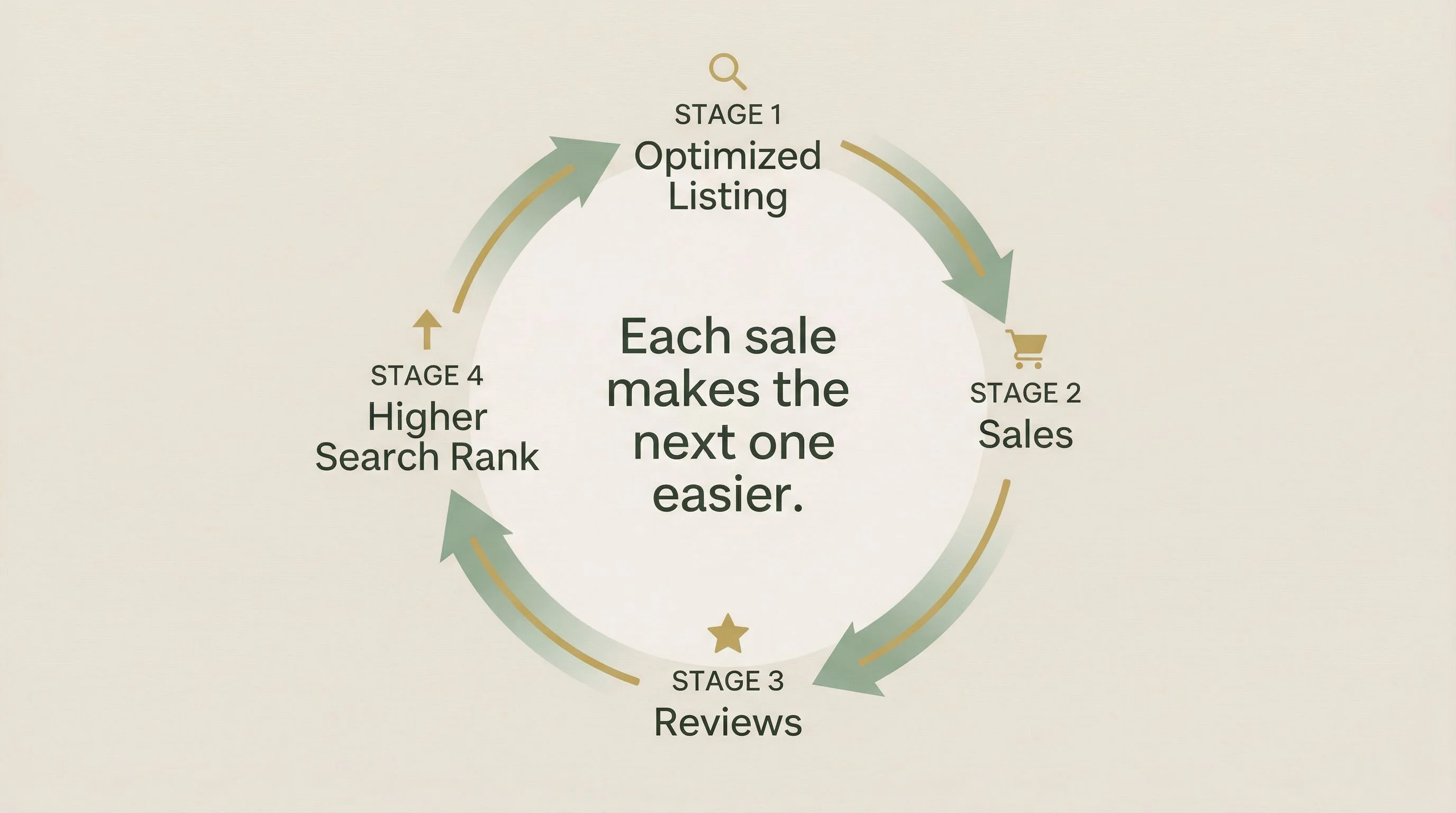
This is where it all connects. This seller has reduced friction to near zero: the product arrives framed, hardware included, free shipping. That means fewer customer complaints, fewer messages, and more five-star reviews. Those reviews earn them Star Seller status, which gives them the badge that increases click-through rate in search, which drives more traffic, which drives more sales, which generates more reviews. Each sale makes the next one a little easier to get.
And because this shop runs the same print-on-demand formula across dozens of variations (abstract botanicals, dried wildflowers, multicolor florals, moody dark botanicals, and on and on), every listing feeds the shop's overall authority on Etsy. When one listing takes off, it lifts the whole catalog.
The early reviews on listings like this often mention that the frames are MDF rather than solid wood, or that a corner arrived slightly chipped. But look at the star ratings: still 4.8+. The value proposition is so strong at the price point that buyers forgive minor imperfections and still leave glowing reviews. That's a product-market fit signal you can't fake.
Your micro-niche opportunity
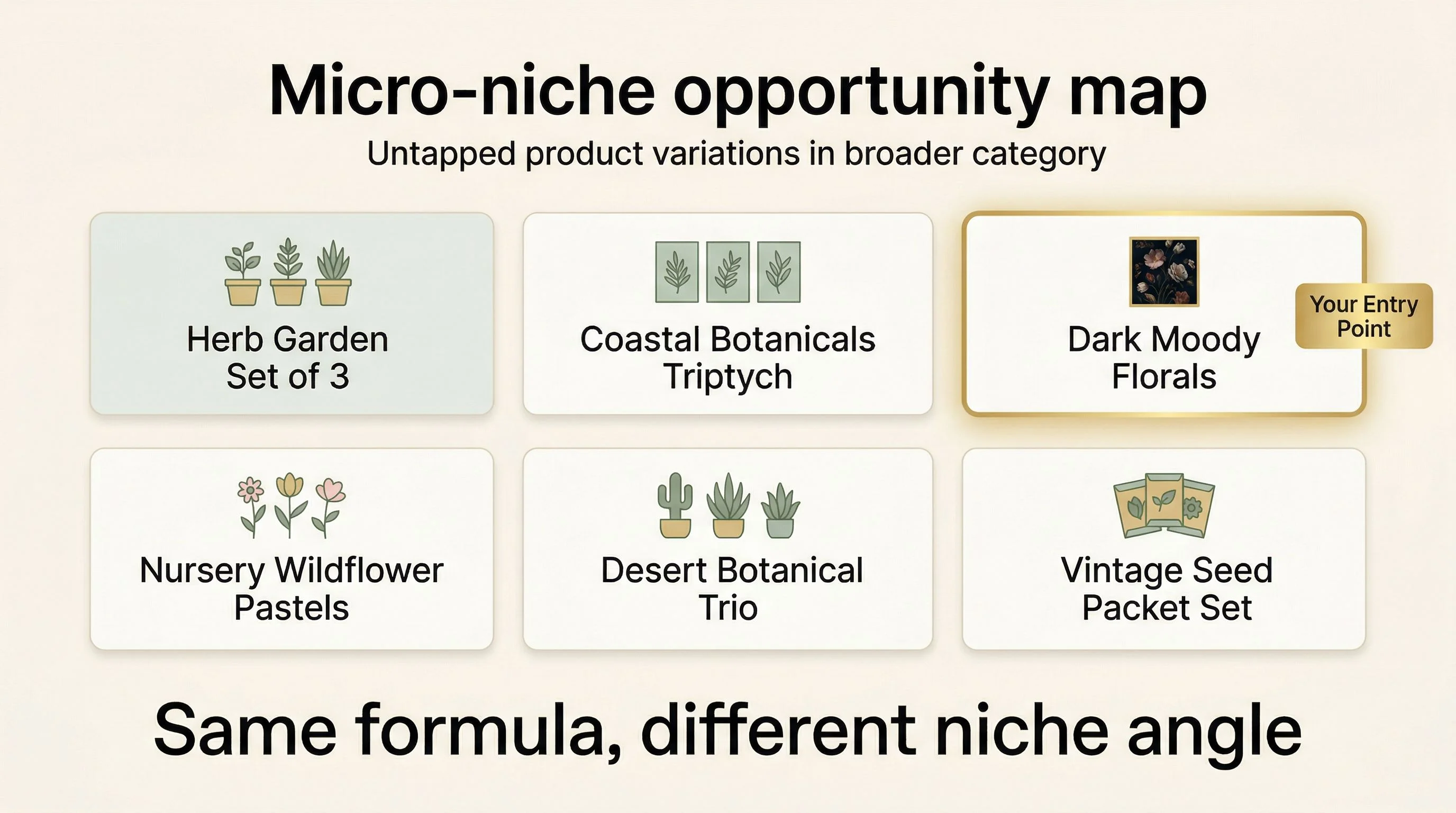
The wildflower-print-set-of-3 space is competitive now. The top spots are locked up by established Pro sellers with deep catalogs and hundreds of reviews. But the formula itself is wide open for adjacent niches that haven't been saturated yet.
Think about it: the same "curated set of 3, coordinating designs, styled mockup, framed and ready to hang" model works for herb garden illustrations, coastal botanicals, vintage seed packet art, dark moody florals, desert succulents, or nursery-specific pastels. Each of those is a search intent with real buyer demand and less entrenched competition than the broad wildflower category.
And here's where print-on-demand makes this genuinely accessible. A service like Printify connects directly to your Etsy shop. You upload your designs, choose your product (canvas prints, framed prints, posters), set your price, and publish. When a customer orders, Printify's print partner produces and ships it. You never hold inventory. You never pack a box. Your cost per unit is locked in, your margin is the difference, and the only thing you need to bring to the table is the design and the listing.
The design part is more approachable than you might think. Watercolor botanical art is one of the most forgiving styles to create or commission. Tools like Midjourney and other AI image generators can produce cohesive sets in minutes. Pair that with a Canva or Photoshop mockup template showing your set styled in a living room, and you have a listing that looks indistinguishable from the Pro sellers dominating the search results right now.
The seller behind this listing didn't stumble into the top of the search results. They built a system: seasonal timing, niche-specific product design, friction-free fulfillment, and listing optimization that compounds over time.
If you'd rather skip physical fulfillment entirely, digital downloads (printable wall art) lower the barrier even further. No fulfillment partner needed. No frames arriving chipped. Just upload, list, and let the customer print it themselves. Either path works. The important thing is choosing one and building the system around it.
You don't need their catalog or their review count to get started. You need one well-researched niche, one cohesive set, and one listing built with the same intentionality you just saw. The momentum only needs one good push to start building.