I want to walk you through a listing I found today that's a near-perfect example of what a well-positioned digital product looks like on Etsy. Not because it's flashy or complicated, but because it's simple, seasonal, and doing exactly what we teach inside The Etsy Flywheel Formula.
The listing is a printable wall art download from a shop called SolanoDigital. White tulips painted on torn canvas layered over a brown gingham background. Farmhouse meets cottagecore. It's AI-generated, which the seller discloses openly in the description, and nobody in the reviews cares. They love it.
The shop is about two years old, based in Austria, with roughly 3,900 total sales. This single listing has earned an Etsy's Pick badge, Star Seller status, 2,400+ favorites, and at the time I'm writing this, 20+ people have it sitting in their carts.
Let's break down what's actually going on here and why it matters for you.
The timing is not an accident
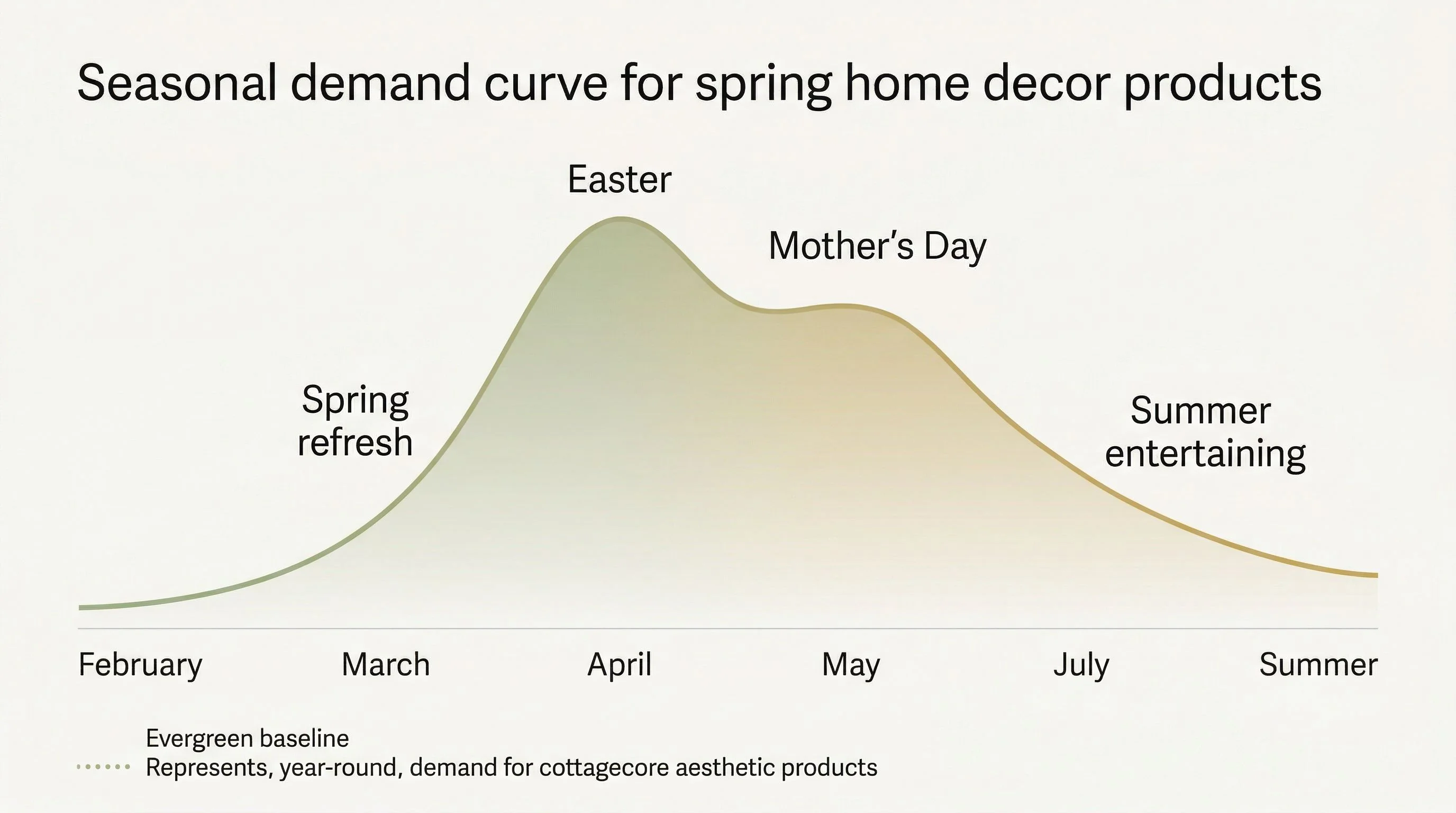
Tulips. Spring. Easter around the corner. Farmhouse decor buyers are refreshing their gallery walls right now. This listing exists at the intersection of a timeless aesthetic and a seasonal moment, which is one of the most reliable patterns in the printable art space.
Seasonal relevance matters because Etsy's algorithm favors listings that are converting right now. When a listing catches a wave of seasonal demand, the increased traffic and sales velocity push it higher in search results, which brings more traffic, which generates more sales. That's the flywheel in action. And the beauty of a product like this is that tulips aren't just an Easter thing. They carry through all of spring and into early summer, giving this listing a long window of relevance before it settles back into steady evergreen sales from the cottagecore and farmhouse crowd year-round.
If you're thinking about what to create next, consider what buyers are actively searching for in the next 30 to 60 days and work backward from there.
The aesthetic is the niche
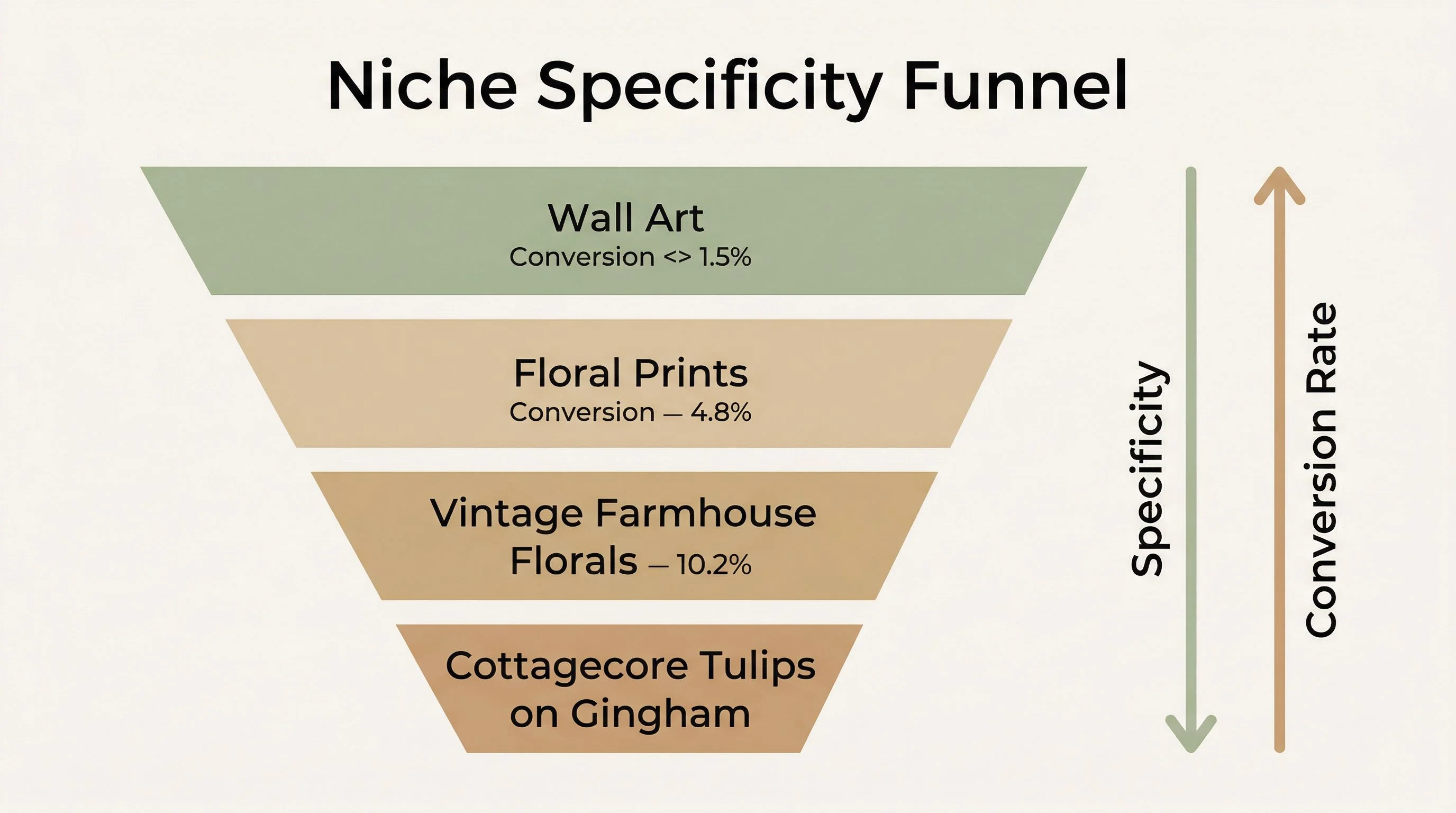
Here's where a lot of people go wrong with printable art. They create something broadly pretty and hope it finds an audience. This listing does the opposite.
It's not "floral wall art." It's white tulips on gingham with a torn canvas texture in warm neutrals. That level of specificity matters because the person buying this already knows exactly what they want. They have a Pinterest board. They have a color palette. They're not browsing for inspiration. They're looking for the next piece that fits.
When your product matches that level of intent, two things happen. Your conversion rate goes up because the right buyer sees it and immediately says yes. And your reviews skew positive because the buyer got exactly what they expected. Both of those feed directly back into search ranking and visibility.
When you own a micro-niche, you don't compete in "wall art." You own a corner of it. Farmhouse gingham florals. Moody dark academia botanicals. Coastal watercolor herbs. Pick a lane and go deep.
The mockups are doing the selling
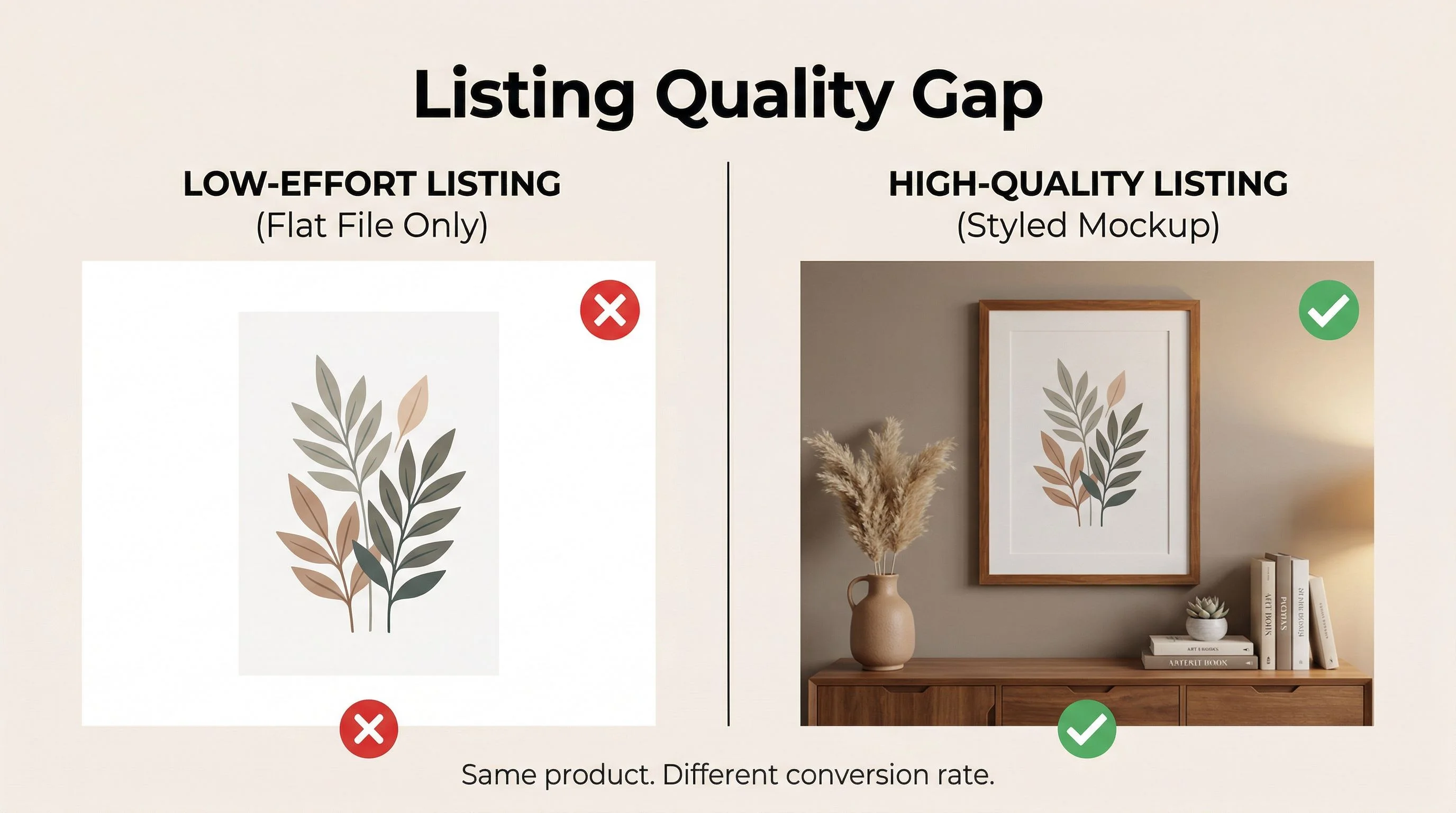
This listing has ten-plus images including styled room mockups, detail crops, a product video, and a customer review photo showing the print actually framed and hanging on a wall.
For digital downloads, this is everything. Your buyer can't hold the product. They can't feel the paper or see the colors in person. The only thing standing between "nice" and "add to cart" is whether they can picture it in their home. Great mockups answer that question instantly.
Most competing listings have two or three flat images and a short description. That gap is your opportunity. Investing time in quality mockups (and you can create these in Canva or with dedicated mockup templates) is one of the highest-leverage things you can do for conversion rate. Every percentage point of improvement in conversion compounds through the flywheel over time.
The operational polish that most people skip
This is the part that separates listings with thousands of sales from listings with twelve.
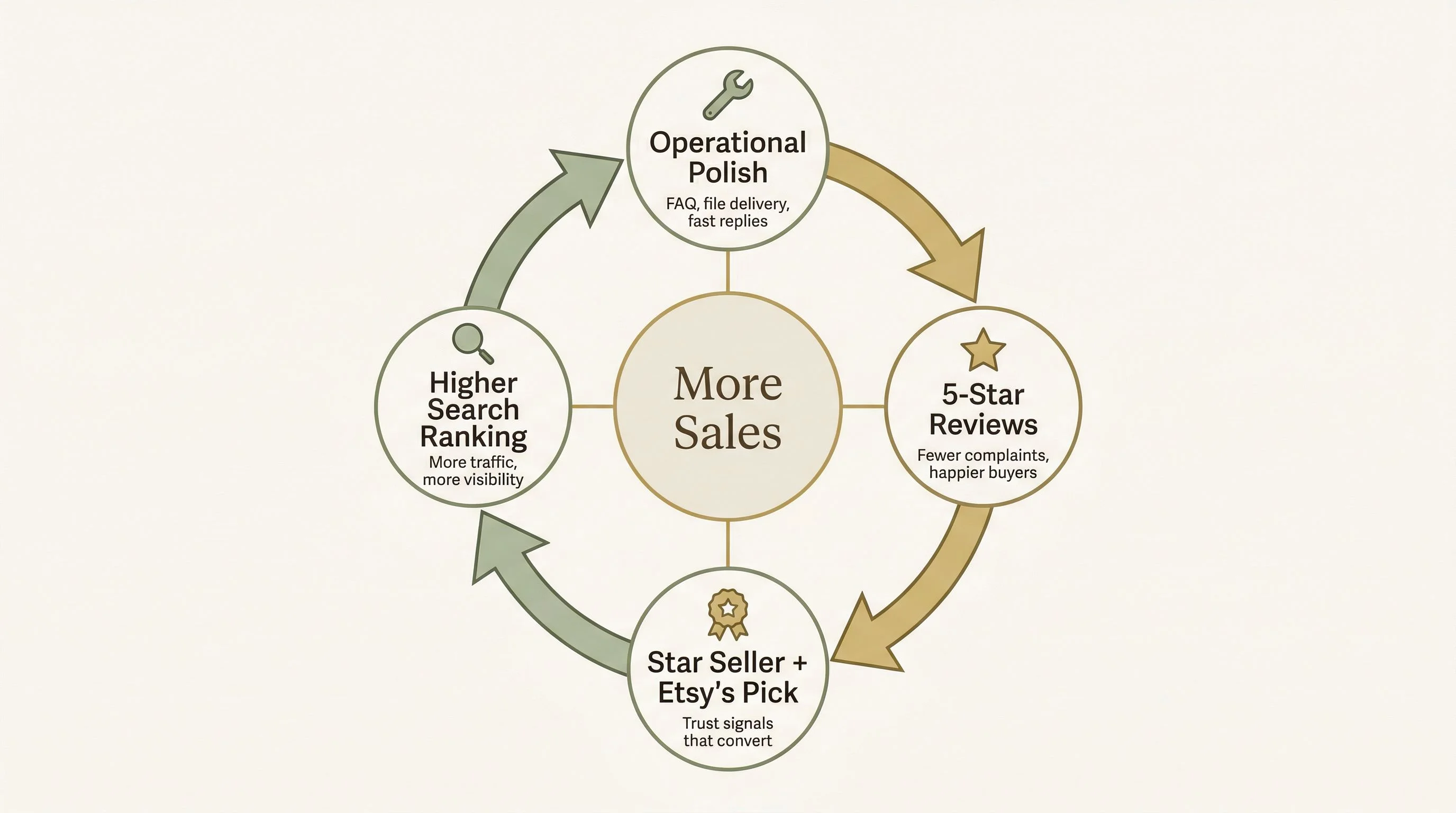
SolanoDigital delivers six JPG files across different aspect ratios covering 25+ print sizes. They deliver via a Google Drive link inside a PDF, which gets around Etsy's file size limitations. Their FAQ covers paper recommendations, download troubleshooting, even edge cases like Apple Pay order issues. They offer custom resizing on request. They respond to messages within hours.
None of this is difficult. But almost nobody does all of it. Together, these details reduce friction at every point in the buyer experience. Fewer confused messages. Fewer frustrated reviews. More five-star ratings. And those five-star ratings feed Star Seller status, which feeds the Etsy's Pick badge, which feeds search visibility, which feeds more sales.
You're not just serving a customer. You're building the machine that brings you the next one.
You can do this
I want to be direct about something. There is nothing about this listing that you can't replicate. The art is AI-generated. The mockups are templated. The description is thorough but formulaic (in a good way). The operational systems are just good habits applied consistently.
The seller didn't get to 3,900 sales because they had some secret advantage. They got there by picking a clear aesthetic lane, creating a catalog of products within it, and doing the unglamorous work of optimizing listings, maintaining Star Seller standards, and showing up consistently over two years.
That's the whole game. And spring is honestly one of the best times to start if you're looking at the home decor and wall art space. Buyers are actively refreshing their homes right now. Easter, Mother's Day, and summer entertaining season are all ahead of you. Every listing you publish in the next few weeks has a chance to catch that seasonal wave and start building momentum.
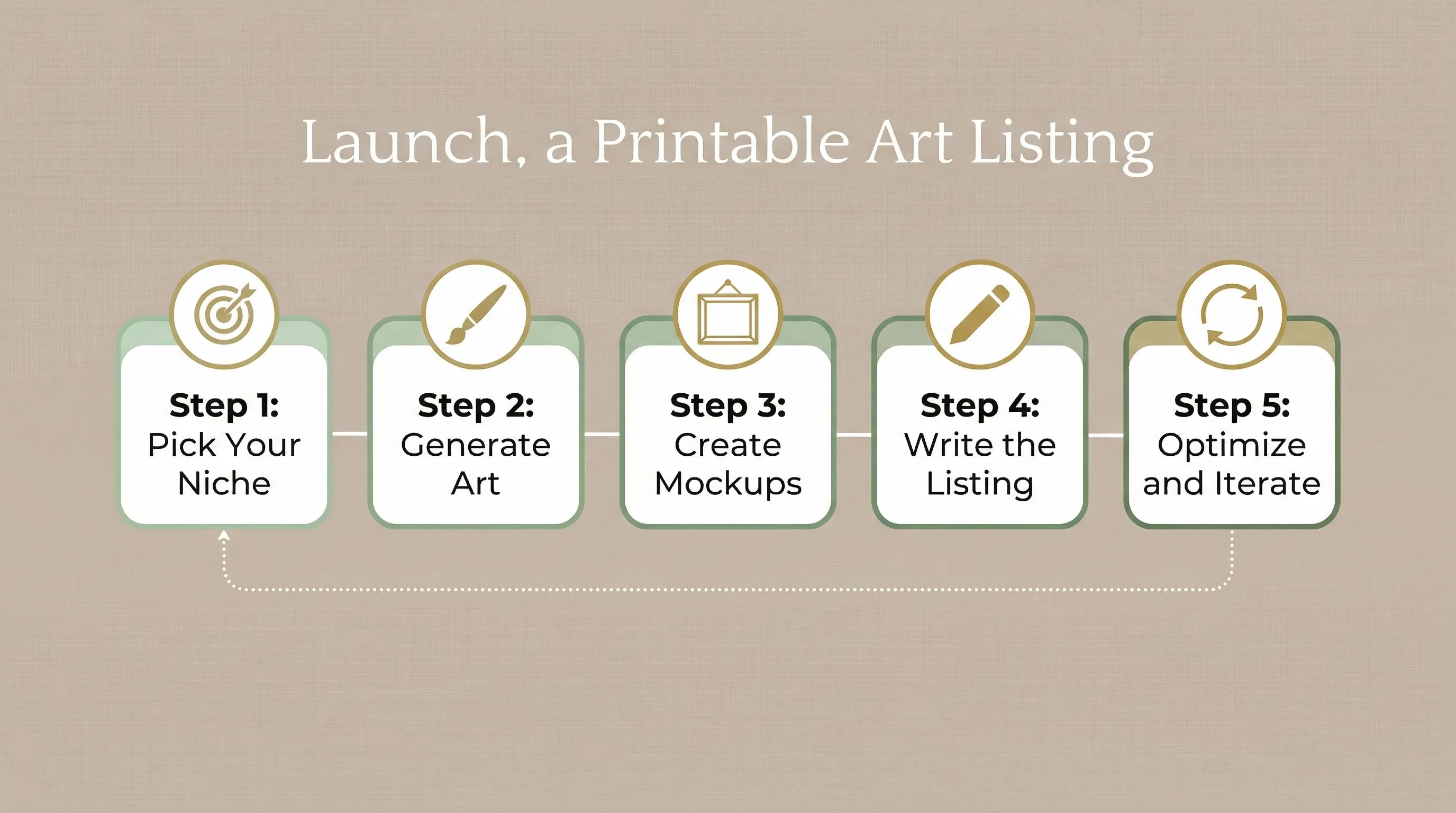
Pick your niche. Create your first five listings. Make the mockups great. Write descriptions that actually help your buyer. And let the flywheel start turning.