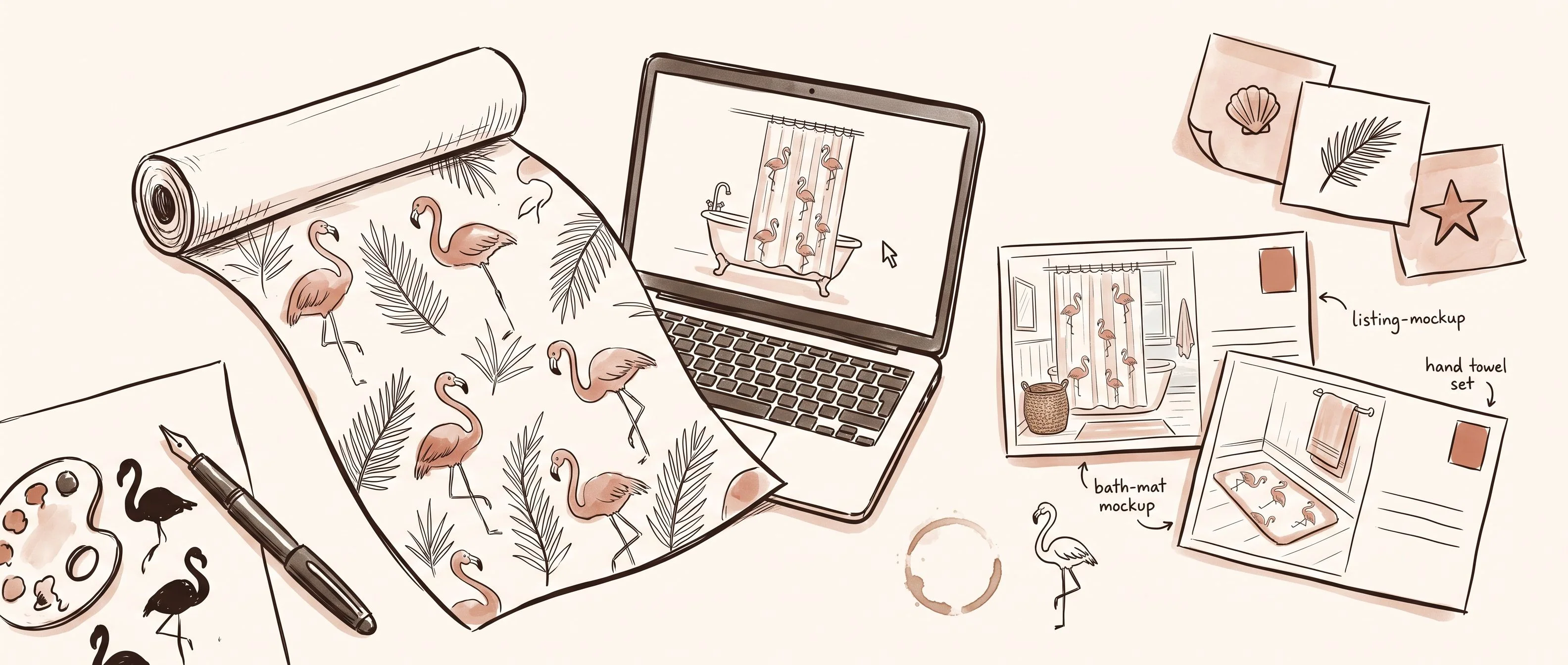
The biggest single surface in most bathrooms isn't a wall. It's the shower curtain, roughly thirty-five square feet of fabric, and it's the closest thing home decor has to a one-piece room makeover. Swap it out and the entire bathroom changes before lunch.
You'd expect a category that ordinary to be a race to the bottom, and mostly it is, an endless scroll of twenty-dollar commodity curtains. Then you run into this pastel flamingo curtain from Lovinggiftsbygigi, a small print-on-demand shop, priced at $62 with nothing but five-star reviews and a dozen shoppers holding it in their carts on an ordinary Thursday.
The curtain is lovely, but it isn't really the story. The story is the niche underneath it, pastel coastal, and what it tells you about where decor buyers are putting their money right now. That's worth leaning in for, because this niche has more open doors than claimed ones.
The product is evergreen, the pattern is the trend
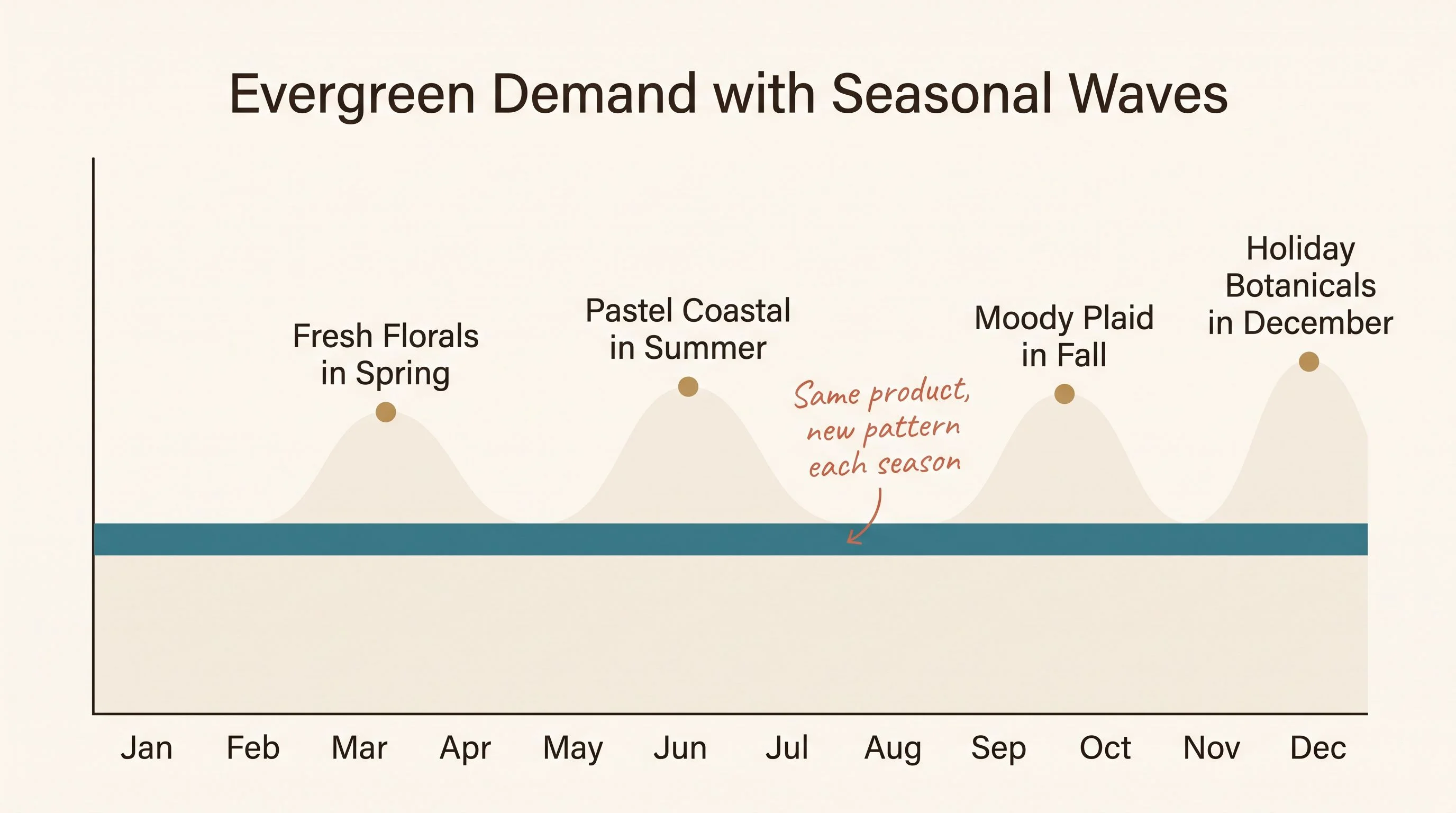
Coastal spikes in summer, sure. But zoom out and shower curtain demand never actually leaves. Bathrooms get refreshed after moves, after repaints, before the in-laws visit, and in the great January reset, which makes the curtain itself one of the most evergreen blanks in home decor.
That's the real insight hiding in this listing. The seller isn't in the flamingo business, she's in the pattern business. The same curtain blank, the same fulfillment, and the same listing structure will carry moody plaid in October, botanical sprigs and berries in December, and fresh florals in spring.
Most sellers chase one seasonal wave and start from zero when it passes. Design on a canvas that never goes out of demand and you never start from zero. You just change the costume.
The niche is a feeling, not a product
Nobody wakes up wanting a polyester rectangle. The pastel coastal buyer wants her bathroom to feel like a beach cottage at eight in the morning, soft light, salt air, vacation without the drive. The curtain is just the fastest way to get there.
That's why this niche supports premium pricing while generic beach decor drowns at the bottom of search. Pastel coastal sits at a specific intersection: coastal, but softened into pastels. Tropical, but cozied into cottage. It borrows from the coastal grandmother wave without saying the words, and it photographs beautifully, which matters more every year.
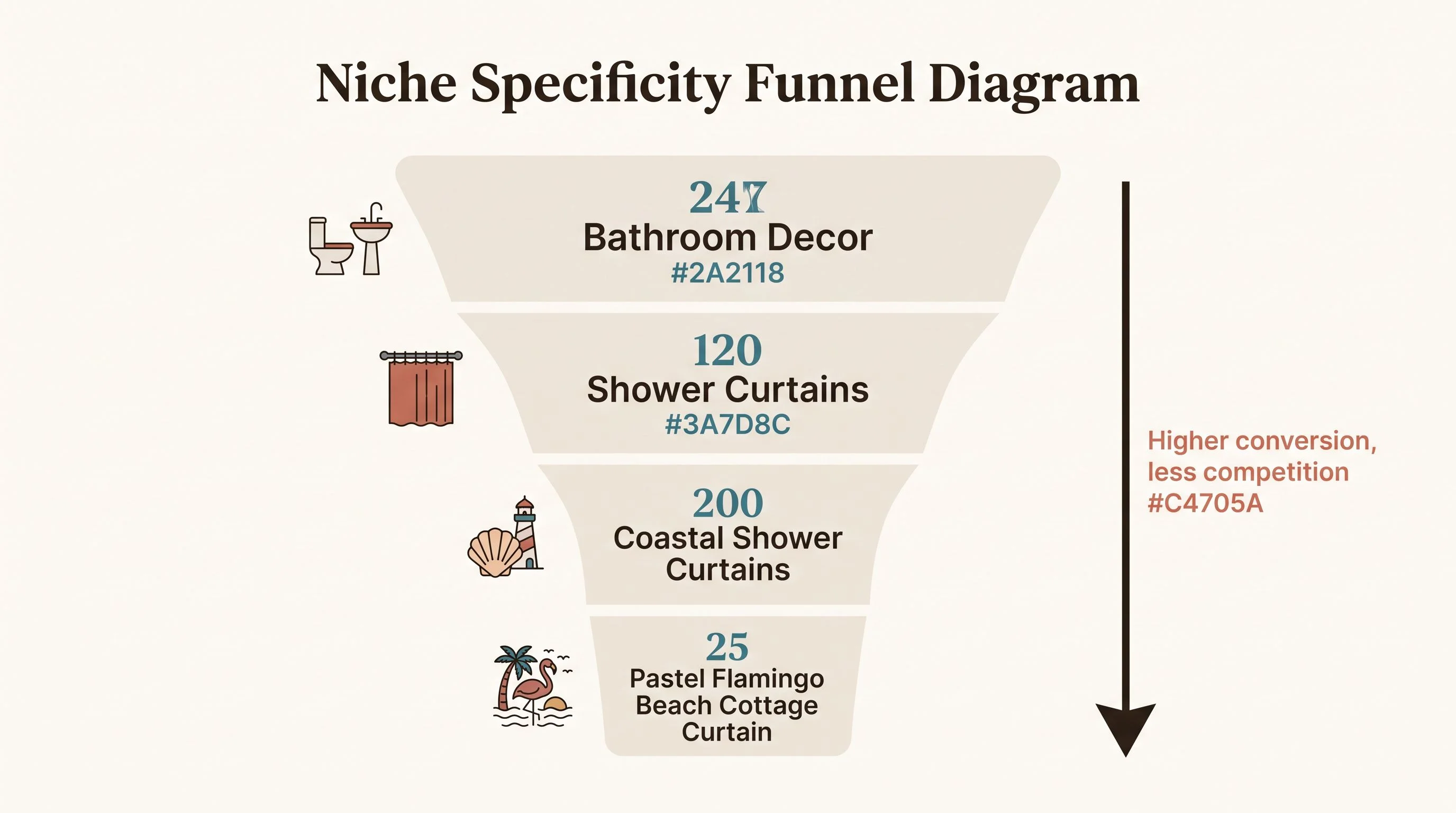
You can see the intersection in the listing title itself: Coastal Flamingo Shower Curtain, Pastel Beach Bathroom Decor, Tropical Cottage Bath. Three complete search intents in one line. The buyer who knows exactly what she wants, the browser shopping an aesthetic, and the searcher using a style synonym all land on the same product.
Here's the part most sellers miss. The bathroom is the lowest-risk room in the house to commit to a bold aesthetic. Nobody repaints a living room on a whim, but a flamingo bathroom is one curtain and two towels away. That low commitment is exactly what makes decor buyers adventurous here, and adventurous buyers are the ones who pay for personality.
The pricing tells the same story. The curtain lists at $68.95 and sells at $62 with a ten percent sale and a countdown timer, a classic anchor that makes a premium price feel like a deal without ever competing on price.
Notice what that price does beyond the margin. It quietly filters out the bargain hunter and keeps the buyer who's decorating on purpose, which is exactly who leaves the glowing, detailed reviews that keep a listing climbing.
The photos sell the room, not the curtain
The listing uses twelve photos, nearly every slot Etsy allows, and on a product bought entirely with the eyes, that's the conversion engine. Nobody reads fabric specs and adds to cart. They see the curtain hanging in a bright, styled bathroom and picture their own morning inside it.
One reviewer even mentioned how perfectly it matched her freshly painted bathroom. That's the photos doing their job, selling a finished room instead of a sheet of polyester. Whatever niche you choose, this is the standard: fill every slot, style the scene, and let the buyer step into the picture.
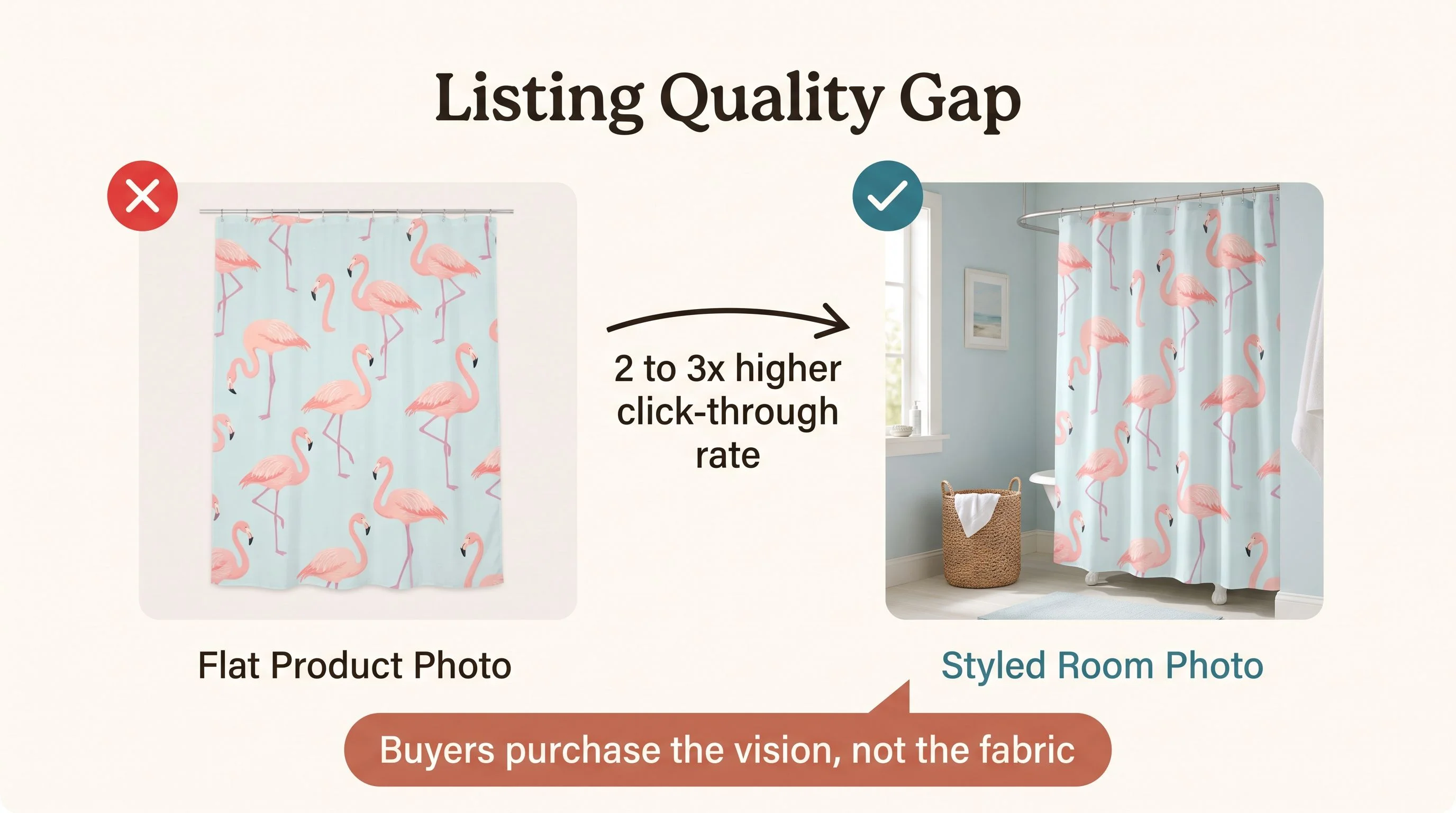
Nobody buys a shower curtain. They buy the feeling of walking into a different bathroom tomorrow morning. Sell the feeling and the price tag stops being the conversation.
The polish that lets a premium price breathe
A no-returns, made-to-order product at three times the commodity price only works if everything around it says trustworthy. This shop earned a Star Seller badge, keeps every review at five stars, and replies to each one warmly and personally, right where the next hesitant buyer will read it.
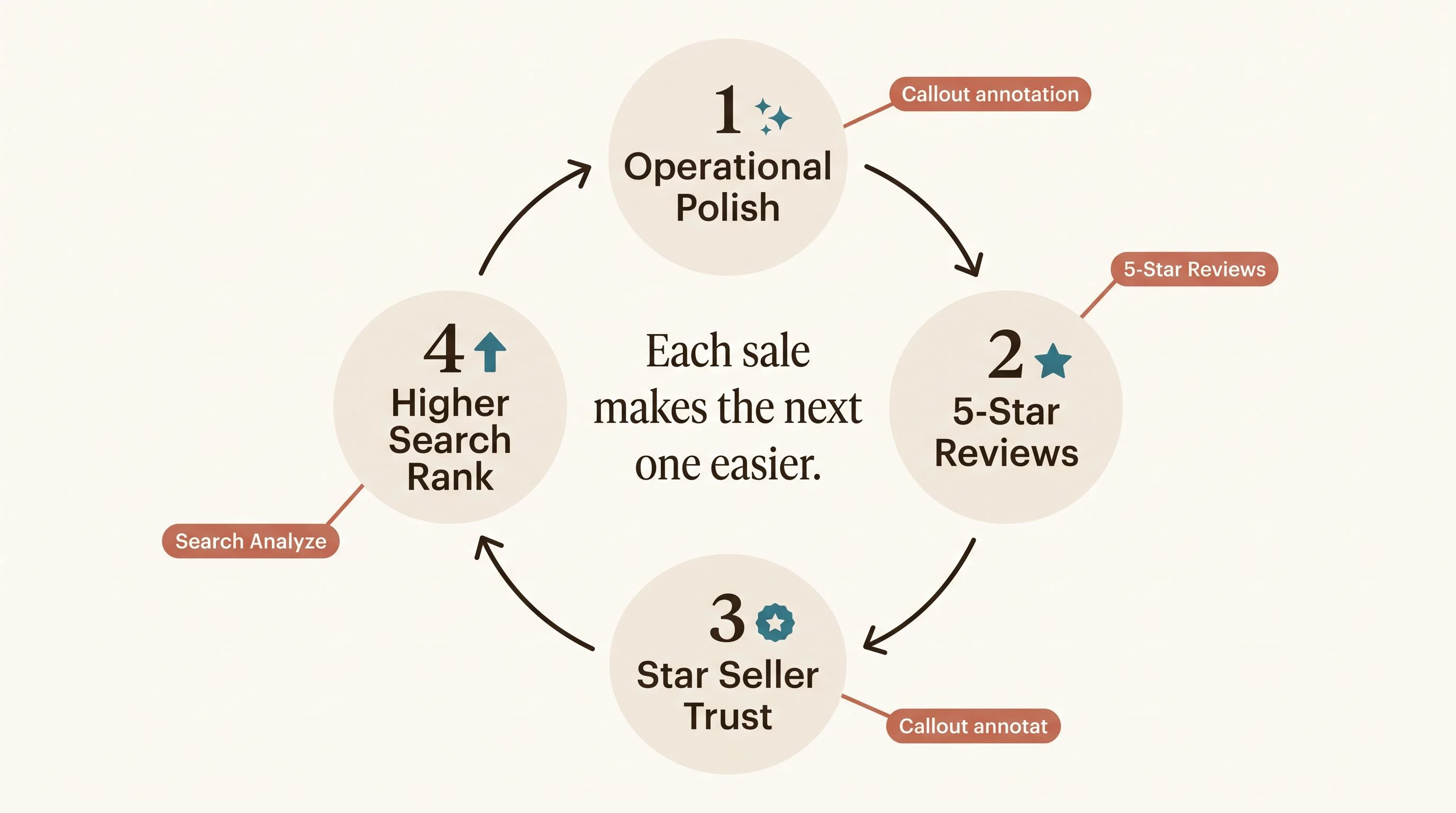
None of that is glamorous, and all of it compounds. Polish produces glowing reviews, reviews produce badges, badges produce trust and search visibility, and visibility produces the next sale. This single curtain is dramatically outselling everything else in its own shop, and that gap is the loop working, not luck.
The lesson for your own shop is that the boring details are the moat. Anyone can upload a design. Very few people answer messages fast, ship on time for months straight, and thank every reviewer by name.
Your corner of the coast
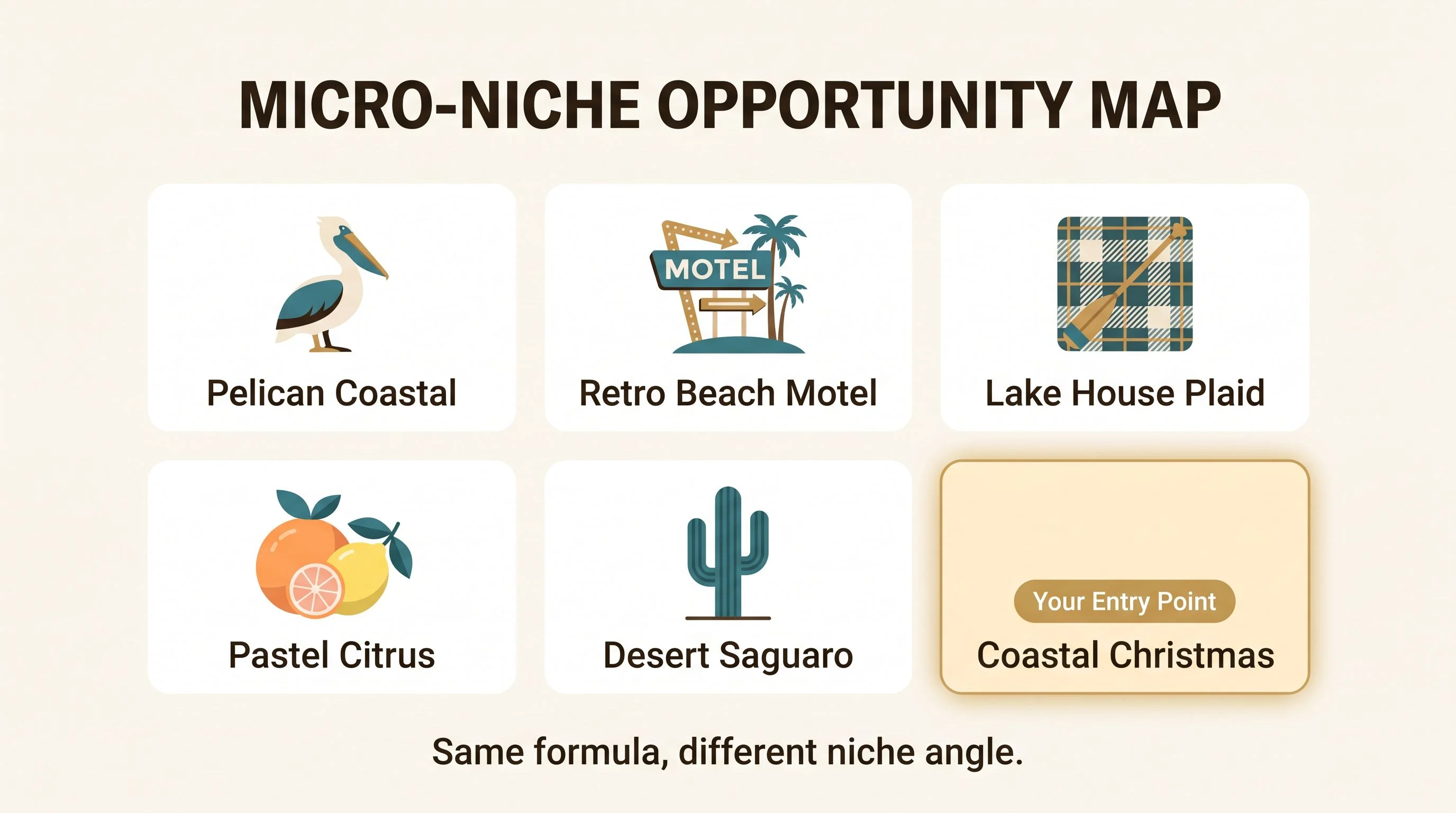
You don't need this curtain's spot in the results. You need its formula pointed at an intersection nobody's claimed. The pattern is aesthetic plus motif plus room, and every variable you swap opens a fresh lane.
Pelicans or herons instead of flamingos for the quieter coastal buyer. Retro beach motel graphics for the kitsch lover. Lake house plaid for the cabin crowd, pastel citrus for a brighter summer bathroom, soft terracotta saguaro for the southwest home. Each of those is searchable, underserved, and reachable with the exact playbook you just watched.
Then think in rooms, not products. The buyer who spends $62 on a statement curtain wants the matching bath mat, hand towels, and a print for the wall. One strong motif, carried across a small family of products, turns a single sale into a bathroom.
How you'd actually make one
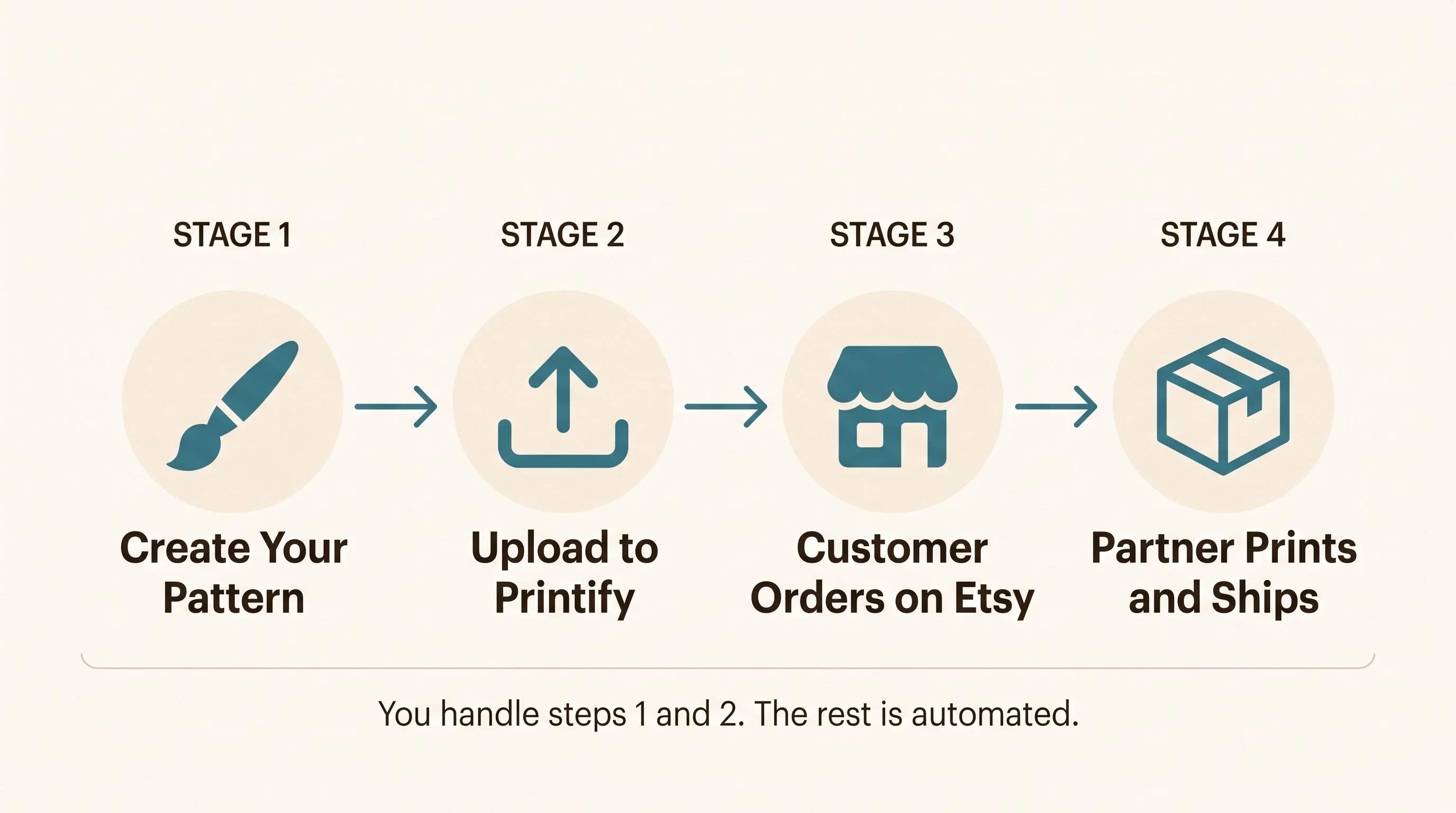
Here's the part that surprises people: print-on-demand services like Printify carry shower curtains as a blank product. You upload your artwork, connect the service to your Etsy shop, and when a customer orders, the print partner produces the curtain and ships it directly to her door. You never touch fabric, packaging, or a post office line.
That means your entire job lives on the creative side: the pattern, the photos, the listing. And the pattern is the heart of it. A shower curtain is thirty-five square feet of repeating design, so the sellers who win this category are really pattern designers wearing a home decor hat.
If designing patterns is the step that's been stopping you, you'll want to stay close. We've been building something new inside SecondStream made exactly for this part of the process. It's called Pattern Playground, and that's all we're saying for now. Members will get their hands on it first.
Pick your corner of the coast, or your cabin, or your citrus grove. Design one motif you'd hang in your own home, photograph it like it belongs in a magazine, and list it. The demand is already there, waiting for the right pattern.